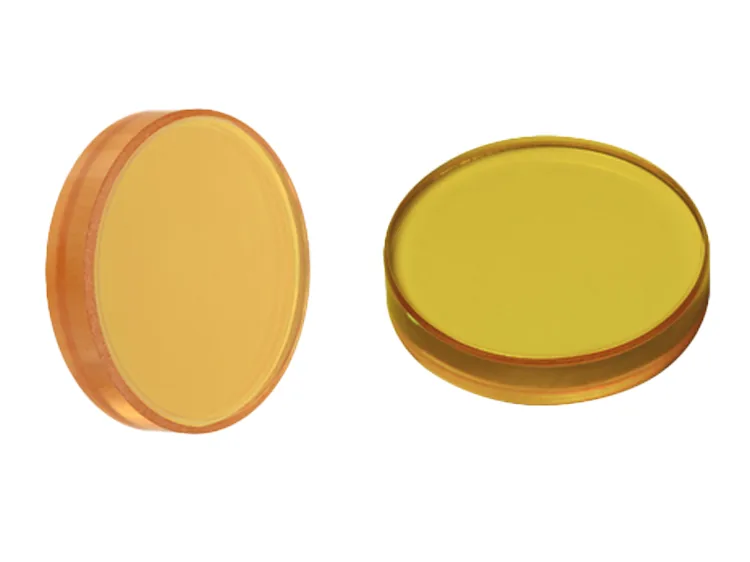
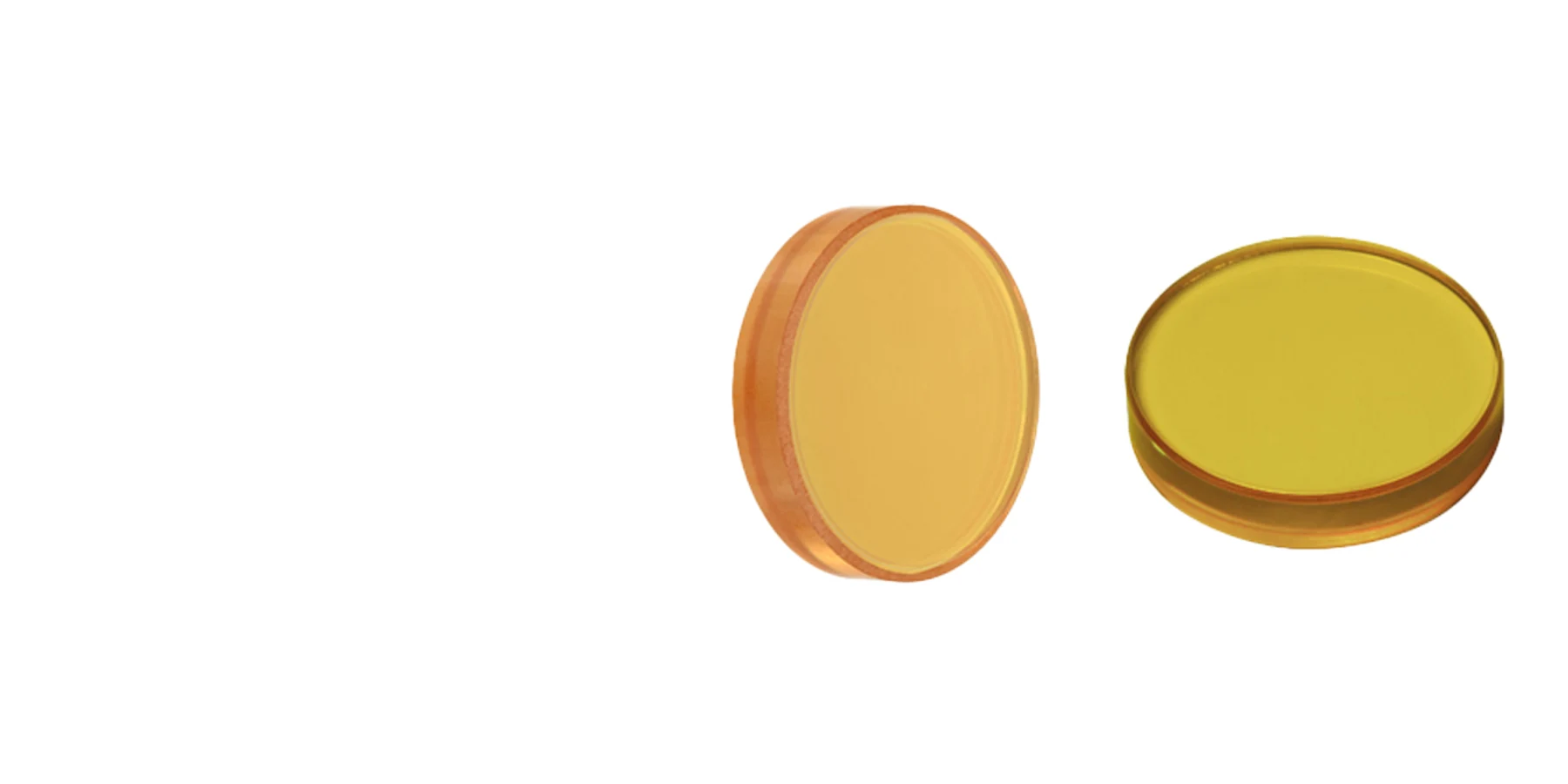
Golden round ZnSe windows with polished optical surfaces
Zinc selenide / Infrared optics

ZnSe Windows.
A clearer path
for infrared.

Connect your optical design to the right material. ZnSe windows for CO2 lasers, infrared imaging and precision spectroscopy, with specifications shaped around your application.

Application-led selectionCustom specification review
ZINC SELENIDE
Product images from the supplied material library
0.6–21 µmTypical bulk transmission range*
10.6 µmA key CO2 laser wavelength
2.4028Typical refractive index at 10.6 µm*
Your designGeometry, coating & acceptance criteria
01 / Applications

One material.
Many infrared possibilities.

Start with what the window must do. ZnSe windows transmit light while separating your optical path from its surroundings. Wavelength, environment and laser load determine the right specification.

01

ZnSe for CO2 laser beam delivery

Consider a ZnSe window for transmitting the 10.6 µm beam through a protective interface. For cutting, marking or engraving systems, review beam diameter, contamination and cooling before choosing the optic.

Specify: wavelength + power + beam profile
02

Thermal imaging

A ZnSe infrared window can form the optical interface of a detector enclosure. Match its coating to the camera band and check thermal drift, clear aperture and mount stress at the system level.

Specify: detector band + field of view
03

ZnSe for FTIR & spectroscopy

Evaluate ZnSe windows for a broadband measurement path or compatible sample-cell interface. Include the full spectral range, sample chemistry and background-reference procedure in the design review.

Specify: spectral range + sample compatibility
04

Gas analysis

For an infrared gas cell, a ZnSe window may separate the optical channel from the sample. Pressure differential, gas chemistry, temperature and sealing geometry need explicit engineering review.

Specify: gas + pressure + seal design
05

Non-contact temperature sensing

Assess ZnSe windows for pyrometers and process observation ports. A window changes the spectral response, so calibrate the complete sensor assembly and consider deposits on either surface.

Specify: sensor response + process conditions
06

Research & optical test benches

Use a ZnSe window as a candidate interface in experimental infrared systems. For coherent light, consider a wedge to reduce parallel-surface interference, and define transmitted wavefront requirements.

Specify: wavefront + incidence angle

Application suitability is design-dependent. Bulk material reference: ZnSe material data. For the supplier's product overview, see XINKEHUI ZnSe materials. These references are not batch certificates.

Round zinc selenide windows showing their characteristic yellow transparency
ZnSe window appearance is illustrative; coating and dimensions are specified per order.
02 / Material advantages

Performance starts
with the optical path.

ZnSe is a useful infrared optical material, but a successful ZnSe window is more than a transparent disc. Surface finish, coating and mechanical integration all matter.

Broad ZnSe infrared capability

ZnSe spans a wide infrared region. Choose the usable band from the actual thickness and coating response, not only the nominal material range.

Coatings matched to the mission

A ZnSe AR coating can reduce interface reflections. Define wavelength, angle of incidence and polarization to avoid optimizing the wrong optical condition.

ZnSe visible alignment possibilities

ZnSe's visible transmission can help with compatible alignment wavelengths. Check the coated assembly: an infrared coating may change visible throughput.

A specification you can inspect

For each ZnSe window, agree on dimensions, surface quality and optical tests. An acceptance plan makes the procurement decision clearer than a generic quality label.

03 / Window configurations

Fit the window
to your system.

Discuss round, rectangular and application-specific ZnSe windows with our team. Supplied photos show example geometries, not confirmed stock or guaranteed coating performance.

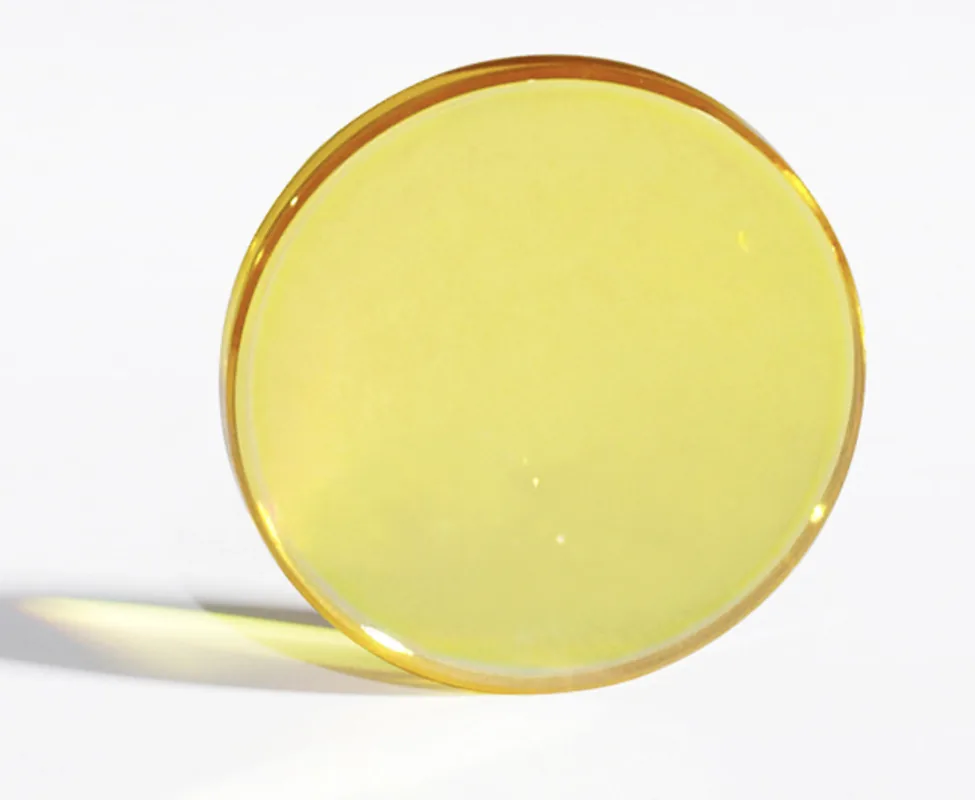
Polished round ZnSe window standing upright

Round ZnSe windows

For circular optical ports and conventional mounts. Include diameter, thickness, edge treatment and the required optical clear aperture.

Specify a round window
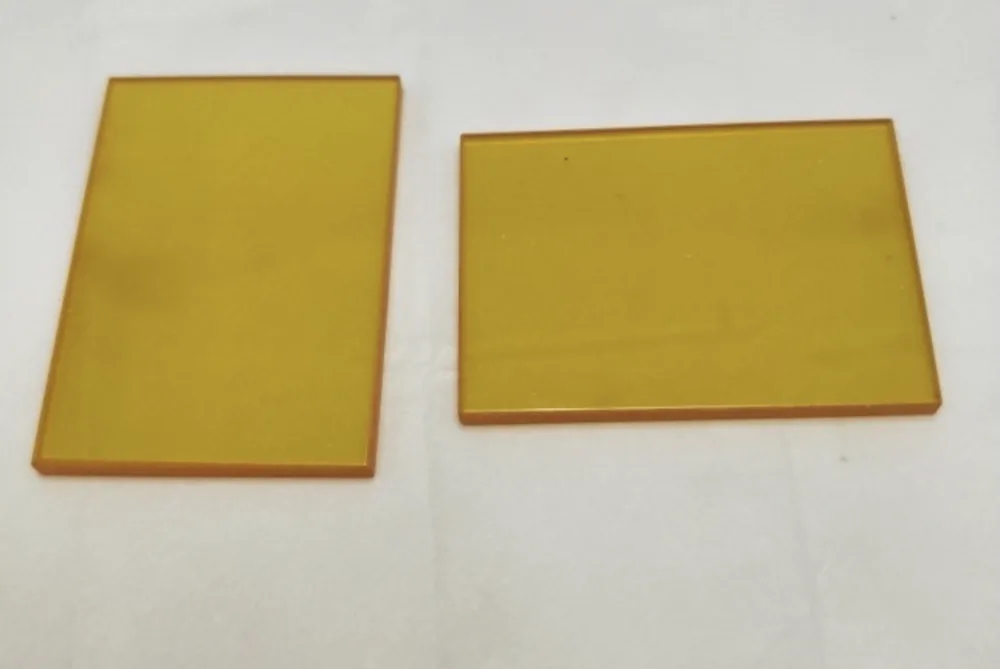
Two rectangular ZnSe window plates with golden polished surfaces

Rectangular ZnSe windows

For rectangular ports and custom assemblies. Send length, width, thickness, corner details and a drawing of the mounting interface.

Discuss a rectangular window
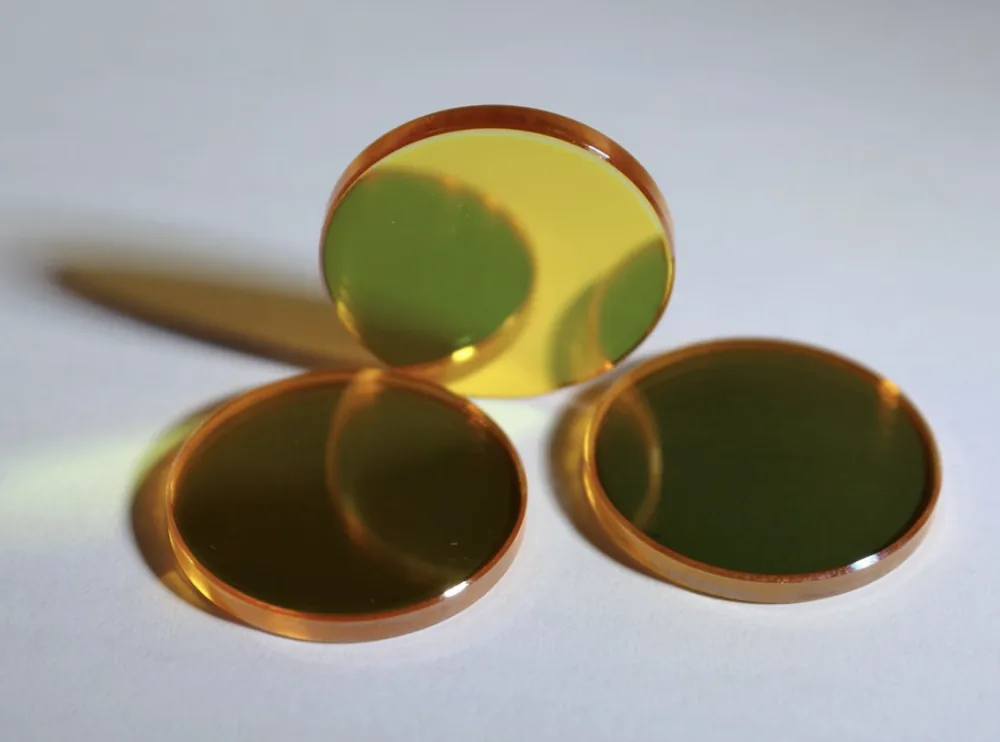
Three golden ZnSe optical discs with reflective polished surfaces

Coated ZnSe windows

For a defined laser wavelength or infrared band. Request coating feasibility, spectral performance and relevant test conditions.

Review coating requirements
Need a replacement ZnSe window? Send the existing drawing or measured dimensions, equipment model and operating wavelength. A window does not focus a beam like a lens; match the component function before ordering.
04 / Technical reference

ZnSe window
material & specifications.

The values below describe typical zinc selenide material. They are reference data, not a guaranteed specification for every XINKEHUI ZnSe window.

ZnSe optical performance depends on material grade, thickness, surface condition and coating. Request order-specific ZnSe acceptance criteria and test documentation.

ZnSe technical reference
Typical ZnSe bulk material properties
PropertyTypical reference valueConditions / interpretation
Chemical compositionZnSe — zinc selenideZnSe optical grade must be confirmed
Transmission range*0.6–21 µmBulk reference; useful band depends on thickness/coating
Refractive index*2.4028At 10.6 µm; wavelength-dependent
Density*5.27 g/cm³Typical bulk material
Thermal conductivity*18 W/(m·K)At 298 K
Thermal expansion*7.1 × 10⁻⁶ /KAt 273 K
Specific heat capacity*339 J/(kg·K)Typical reference value
Knoop hardness*120 kg/mm²Relatively soft; avoid abrasive handling
Young's modulus*67.2 GPaNot a finished-window pressure rating
Poisson's ratio*0.28Typical bulk material
Crystal structure*Cubic, zinc blendeSpecify the manufacturing grade separately
Uncoated reflection estimateAbout 17% per surface at 10.6 µmNormal incidence; calculated from n = 2.4028

*Source: published zinc selenide material data. Fresnel estimate: R = [(n − 1)/(n + 1)]², ignoring absorption. No batch-specific transmission curve is implied.

Define your ZnSe window

Drawing itemRequired information
GeometryRound / square / rectangular; review custom shapes
Size & tolerancesDiameter or L × W, thickness, dimensional limits
Optical apertureClear aperture and usable illuminated area
Surface qualityScratch-dig requirement and inspection standard
Surface figureFlatness and/or transmitted wavefront; test wavelength
Parallelism / wedgeAngle requirement, orientation if relevant
Edge finishBevel, edge chips and mounting keep-out area

Define the ZnSe optical conditions

System itemRequired information
WavelengthSingle wavelength or complete operating band
CoatingUncoated / laser AR / broadband AR, subject to review
Incidence angleAOI range and polarization
Laser loadingCW power, or pulse energy, duration and repetition rate
Beam sizeBeam diameter, definition and profile
EnvironmentTemperature, pressure, media and mount design
AcceptanceRequested tests, report format and sampling plan
No universal ZnSe power or pressure rating. A ZnSe window's safe operating conditions depend on the finished optic and assembly. Numerical tolerances, coating reflectance, laser damage threshold, lead time and stock are confirmed only in the ZnSe quotation.

ZnSe window selection: compare the trade-offs

CandidateWhy evaluate it?Key question before selection
ZnSe windowsBroad infrared use; possible visible alignmentIs the surface/coating suitable for the optical load?
Germanium windowsCommon candidate for infrared-only systemsDo you need visible transmission and thermal stability?
Fused silica windowsCandidate for visible and near-IR workDoes the material transmit the required infrared wavelength?
Sapphire windowsCandidate when surface durability is importantDoes its usable band overlap the detector or laser band?

This is a design-screening guide, not a statement that one material is interchangeable with another. Confirm transmission data for the selected grade and thickness.

05 / From requirement to quotation

Make your next
ZnSe window easier to specify.

Whether you are replacing one optic or planning a production assembly, a clear technical brief helps us review feasibility and prepare a relevant quotation.

01 / SHARE

Describe the ZnSe application

Tell us what the ZnSe window separates, the operating band, optical load and environmental conditions.

02 / DEFINE

Send the geometry

Share your ZnSe drawing or dimensions. Include clear aperture, thickness, tolerances and mount details.

03 / REVIEW

Agree on acceptance

Review ZnSe coating needs, inspection criteria and requested reports before the order is confirmed.

04 / CONFIRM

Plan the supply

Confirm ZnSe quantity, destination, packaging, quotation, availability and dispatch schedule with our team.

Handling matters. Treat ZnSe as a soft optical material: use clean gloves, hold the edges and store each optic separately. Do not grind, scratch or machine ZnSe without appropriate controls. Request the material SDS and coating-specific cleaning guidance; isolate damaged parts.
06 / About XINKEHUI

Materials expertise.
A practical partnership.

Shanghai XINKEHUI company logoXINKEHUI

shanghai xinkehui new materails co.,ltd specializes in the production and sales of semiconductor and optical materials. Our portfolio includes silicon wafers, silicon carbide wafers, sapphire substrates, CVD synthetic diamond, YAG single crystals, ZnSe windows and sapphire watch cases.

Our published company information describes engineering, precision processing and optical inspection capabilities. For this ZnSe window project, we focus on your specification, application conditions and the documentation required for an informed purchasing decision.

Engineering dialogue

A drawing-led discussion of your ZnSe window's geometry, optical role and inspection requirements.

Specification clarity

ZnSe-specific confirmation instead of applying another material's manufacturing tolerances.

Documentation planning

Discuss dimensional, surface and spectral reports for your ZnSe order before confirmation.

Direct contact

One enquiry route for ZnSe product questions, quotation and supply coordination.

07 / Questions, answered

Know your
ZnSe window.

Practical answers for designers, purchasing teams and equipment owners.

Ask an application question
What is a ZnSe window?

A ZnSe window is a zinc selenide optical plate used to transmit selected wavelengths while providing a physical interface. Unlike a focusing lens, a nominally flat window is not intended to focus the beam.

Which wavelengths can ZnSe windows transmit?

Typical bulk ZnSe reference data gives approximately 0.6–21 µm. The useful transmission of your finished window depends on thickness, grade and coating; ask for a curve covering your operating band.

Are ZnSe windows suitable for CO2 lasers?

ZnSe is a common candidate at 10.6 µm, but suitability is not a universal power rating. Supply the wavelength, CW or pulsed operating conditions, beam profile, cooling and contamination controls for review.

Should I choose coated or uncoated ZnSe windows?

Uncoated ZnSe has significant surface reflection because of its high refractive index. An appropriate AR coating can reduce this loss. Select the coating around the actual wavelength, incidence angle and polarization.

Can one ZnSe AR coating cover every infrared application?

No. A single-wavelength laser coating and a broadband infrared coating have different design targets. Specify the complete band and performance requirement rather than ordering only by the label “AR coated.”

Can I order a custom-size ZnSe window?

Send a drawing for feasibility review, including dimensions, thickness, clear aperture, tolerances and surface requirements. Custom ZnSe dimensions and achievable tolerances are confirmed in the quotation, not assumed from other materials.

Is a ZnSe window the same as a ZnSe lens?

No. A lens has optical power and a specified focal length or curvature. A flat ZnSe window primarily transmits the optical path. Do not replace a lens with a window merely because their diameters match.

How should I clean a ZnSe window?

First request the cleaning procedure for the actual coating. Handle the ZnSe window by its edges with clean gloves and avoid abrasive contact. Do not use an unapproved solvent or cleaning method on a coated surface.

Can ZnSe windows be used in a pressure or vacuum port?

Only after assembly-level engineering review. ZnSe thickness, unsupported diameter, edge condition, mount, seals and pressure differential all matter. The material table does not establish a safe pressure rating.

What information is needed for a ZnSe quotation?

Provide geometry, operating wavelength, coating needs, quantity, delivery destination and a drawing if available. For a laser ZnSe window, add power or pulse data and beam diameter. Include required test reports.

What are the price and availability of ZnSe windows?

ZnSe window pricing and stock are quotation-based and have not been verified on this page. Size, grade, coating, inspection and quantity influence the quote. Ask our team to confirm current availability and lead time.

What inspection documents can I request for ZnSe windows?

Discuss a dimensional report, surface inspection, optical test results and coating spectral data relevant to your ZnSe specification. Availability, test methods and sampling must be agreed before the order; not every test is included automatically.

08 / Let's discuss your project

Your next ZnSe window
starts here.

Share your optical requirements. We will review the details needed for a ZnSe quotation, including feasibility, pricing and availability.

Shanghai officeRoom 1805, Building 1, Wanda Mall,
1079 Dianshanhu Avenue, Qingpu District,
Shanghai, China

Pricing: quotation required. Stock status: not confirmed.
No online payment is collected on this page.

Request a ZnSe quote

* Required fields

Review your enquiry, then send it by email or WhatsApp. Preparing it does not send or store your details.